Side Gate vs. Tube Loading: The Lever Gun Difference That Actually Matters
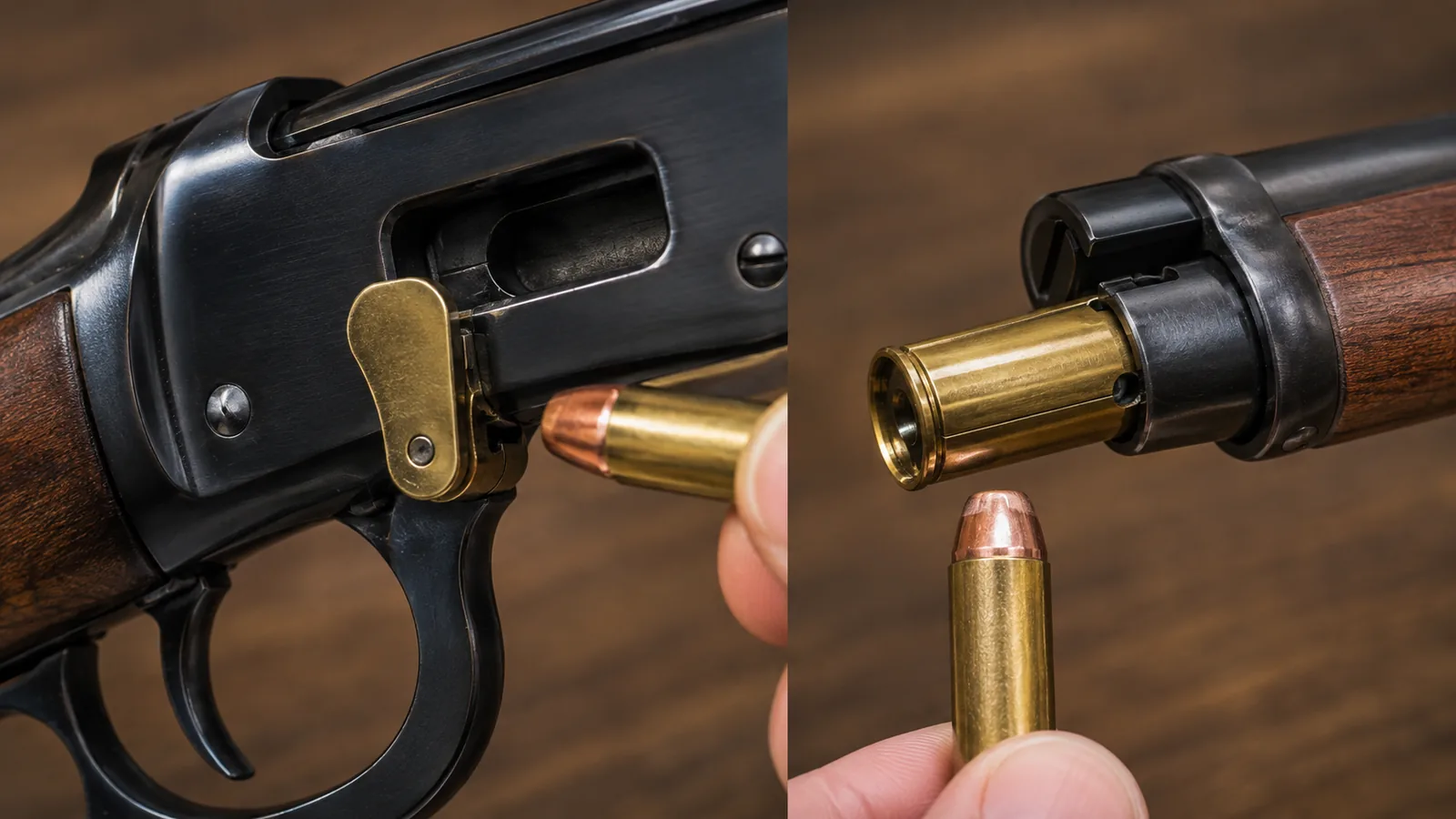
Every lever gun stores its cartridges nose-to-tail in a tube under the barrel. The interesting question is how they get in there — and for a century that question split the lever world into two camps.
The Winchester Way: The Side Gate
The classic method is a spring-steel gate on the right side of the receiver. Press a cartridge through, it clicks past the gate into the magazine, repeat. The virtues are speed and topping off: the rifle stays shouldered, stays pointed downrange, and can be fed one round at a time between shots — which is exactly how a working rifle gets used. The vice: unloading means cycling every live round through the action, and thumbing rounds past a stiff gate can chew tender thumbs.
The Henry Way: The Removable Tube
Traditional Henrys load like a big .22: twist and withdraw the inner brass tube, drop cartridges into the loading port, reinsert. It's slower and the removed tube is a part you can drop in the leaves — but unloading is wonderfully safe. Pull the tube, tip the rifle, and every round slides out without one of them ever entering the chamber. Range officers love it.
Why Modern Rifles Have Both
Henry's Side Gate line ended the argument by fitting the gate and keeping the removable tube. Load fast through the gate, unload safe through the tube. Unless you're chasing a specific vintage configuration, a both-systems rifle is the obvious pick today.
Living With Each System
- Gloves: gates get stiff in cold weather with gloves; tubes don't care.
- Partial reloads: gate wins, decisively. This matters hunting.
- Administrative unloading: tube wins. This matters every single range trip.
- Lost parts risk: only the tube system has one. Don't set the inner tube on the tailgate.
The Henry Big Boy Side Gate in .357 is the textbook both-systems rifle, and the one we point most buyers toward.
Disclosure: LeverGuns.co is reader-supported. When you buy through links on this page we may earn a commission from Ammunition Depot at no cost to you. Pricing and availability change constantly — always confirm current details on the retailer page. Nothing here is legal advice; know your federal, state, and local laws before purchasing any firearm.